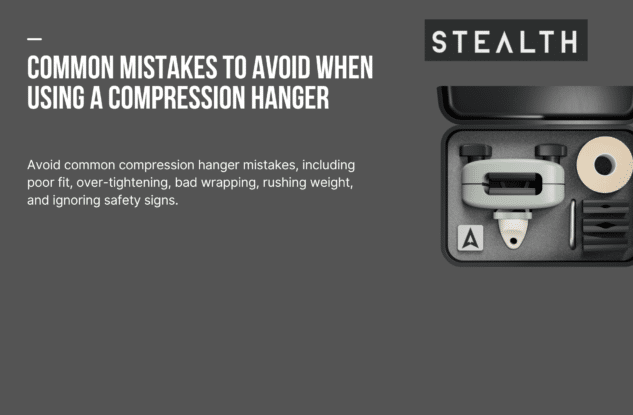
Common Mistakes to Avoid When Using a Compression Hanger
 By Olivia Spring | 4 June 2026, in Self Improvement
Using a compression hanger can be a structured way to support a penile traction routine, but the results, comfort, and safety of your sessions depend heavily on how the device is used. Many beginners focus only on weight, session length, or fast progress, but the real foundation of compression hanging is proper setup, correct sizing, even pressure distribution, gradual progression, and safety awareness.
At Stealth For Men, the goal is to help men approach traction training with better control, better comfort, and better education. The Stealth Compression Hanger is designed for users who want a compression-based alternative to vacuum hanging, with features such as interchangeable traction pads, a secure compression grip, and a stabilization-focused design.
However, even a premium device can feel uncomfortable or perform poorly if it is used incorrectly. Most problems come from simple mistakes: choosing the wrong fit, wrapping too tightly, rushing into heavy weight, ignoring warning signs, or failing to track each session.
This guide explains the most common mistakes to avoid when using a compression hanger, especially if you are new to compression hanging or switching from a vacuum hanger.
Mistake 1: Starting Without Understanding How a Compression Hanger Works
One of the biggest beginner mistakes is using a compression hanger without understanding the basic mechanics behind it.
A compression hanger does not work the same way as a vacuum hanger. A vacuum hanger relies on suction to create grip. A compression hanger uses controlled pressure around the shaft to create a secure hold for traction. That means fit, wrapping, pad selection, and pressure distribution are extremely important.
The Stealth Compression Hanger is designed to apply targeted mechanical traction through a compression grip system rather than vacuum suction. Its interchangeable medical-grade silicone traction pads help users create a more personalised hold.
Before using any traction hanger, take time to understand:
how the compression grip works, how the wrap protects the skin, how the traction pads affect fit, how the device should align, and how to recognise when the setup does not feel right.
For a beginner-friendly explanation, read our guide: What Is the Stealth Compression Hanger and How Does It Work?
Mistake 2: Choosing the Wrong Size
Sizing is one of the most important parts of compression hanging. If the hanger is too loose, it may slip. If it is too tight, it may create pressure points, discomfort, or circulation issues.
Many users assume they can “make it work” with any size, but compression devices require a more accurate fit. The Stealth Compression Hanger is available in two sizes and includes four sets of interchangeable traction pads, allowing users to adjust the fit based on their anatomy and training needs.
A poor fit can lead to several problems:
slipping during the session, uneven pressure, device tilt, discomfort near the grip area, difficulty maintaining traction, and inconsistent performance.
The goal is not to force the tightest possible fit. The goal is to create a secure fit that feels controlled without causing pain, numbness, or discolouration.
Mistake 3: Using the Wrong Traction Pads
Interchangeable traction pads are not just accessories. They are an important part of the compression system.
The wrong pad setup can make the hanger feel unstable, too tight, or too loose. If the channel is too large, the device may not grip properly. If the channel is too small, it may create excessive pressure.
The Stealth Compression Hanger includes multiple traction pad options designed to be mixed and matched for a better fit.
When selecting pads, beginners should avoid guessing. Instead, test the fit carefully and make small adjustments. A good setup should feel secure, balanced, and controlled. It should not feel sharp, painful, or overly compressed.
Mistake 4: Wrapping Incorrectly
Wrapping is one of the most overlooked parts of compression hanging. Many beginners rush this step, but wrapping affects comfort, grip, skin protection, and pressure distribution.
A poor wrap can create several problems:
Skin irritation, uneven compression, slipping, pressure points, pinching, and discomfort during longer sessions.
The Stealth Compression Hanger includes a three-phase traction wrap designed to reduce pressure points and support more comfortable wear.
A proper wrap should be smooth, even, and secure. It should not bunch up, twist, or create thick, uneven areas. If the wrap is too loose, the device may slip. If it is too tight, it may affect comfort and circulation.
Beginners should spend extra time practising the wrap before increasing session difficulty. The best compression hanger setup starts before any weight is added.
Mistake 5: Over-Tightening the Compression Grip
Many users think a tighter grip means a better grip. That is not always true.
Over-tightening is one of the most common and most important compression hanger mistakes to avoid. The goal of compression hanging is controlled traction, not excessive clamping pressure.
Too much compression can cause discomfort, numbness, discolouration, or pressure-related irritation. A secure hold should feel stable but not painful.
If you feel sharp pressure, coldness, tingling, numbness, or visible discoloration, stop the session and reassess your setup. Do not try to push through warning signs.
Mistake 6: Starting With Too Much Weight
This is another major beginner mistake. Many people want fast progress, so they start with too much weight too soon.
Compression hanging should be approached gradually. The body needs time to adapt to traction. Starting too heavy can increase discomfort, reduce control, and make it harder to identify setup problems.
A smarter approach is to begin conservatively. Learn the device first. Focus on alignment, grip, comfort, and session quality before thinking about progression.
The Stealth Compression Hanger kit includes a user guide and logbook with a beginner-friendly 3-month routine template, which is useful because tracking and gradual progression are essential for safer use.
Mistake 7: Ignoring Pain, Numbness, or Discoloration
Pain is not a sign of a better session. Numbness is not normal. Discoloration should not be ignored.
Some temporary mild discomfort can happen with traction devices, but warning signs should always be taken seriously. Research on penile traction therapy has reported side effects such as temporary redness, discomfort, discoloration, swelling, and numbness in some users.
Stop immediately if you experience:
pain, numbness, coldness, blue or dark discoloration, swelling, sharp pressure, skin irritation, loss of sensation, or unusual discomfort.
The safest mindset is simple: if something feels wrong, stop and adjust. Do not continue a session just because you planned a certain time or weight.
For more safety-focused information, read: Is the Stealth Compression Hanger Safe to Use?
Mistake 8: Not Checking Device Alignment
Alignment matters during compression hanging. If the device tilts or pulls unevenly, the traction force may not be distributed properly.
A tilted device can create uneven pressure, discomfort, and an unstable session. This is why stability is an important feature in a traction hanger.
The Stealth Compression Hanger includes an integrated stabilization platform with four embedded para-cords designed to maintain balance and straight-line traction.
Before each session, check that the device is aligned properly. The pull should feel controlled and balanced. If the device shifts, tilts, or feels uneven, stop and reset before continuing.
Mistake 9: Skipping Warm-Up and Setup Checks
Some users rush into a session without checking their setup. This can lead to avoidable problems.
Before adding weight, check:
the wrap, the traction pad position, the compression grip, the device alignment, the attachment point, the carabiner, and your comfort level.
A quick setup check can prevent slipping, pressure issues, and unstable traction. Compression hanging is not something to rush. A few extra minutes of preparation can make the entire session more comfortable and controlled.
Mistake 10: Not Tracking Sessions
Many beginners do not track their traction routine. They rely on memory, which can lead to inconsistent progression or accidental overtraining.
A simple logbook can help you record:
date, session time, weight used, pad setup, wrap method, comfort level, warning signs, and any adjustments made.
Tracking helps you identify patterns. For example, you may notice that one pad setup feels more stable, or that discomfort happens when you increase weight too quickly.
Because the Stealth Compression Hanger includes a user guide and logbook, users have a built-in way to organize their routine from the beginning.
Mistake 11: Expecting Instant Results
Compression hanging is not a quick-fix method. Many users make the mistake of expecting dramatic changes immediately.
A penile traction routine requires patience, consistency, and realistic expectations. Even in medical contexts, penile traction therapy is usually discussed as a process that depends on adherence, proper use, and time.
Avoid thinking in terms of overnight results. Instead, focus on:
safe setup, consistent routine, gradual progression, comfort, and tracking.
The goal is to build a routine that can be followed responsibly, not to chase aggressive results at the expense of safety.
Mistake 12: Comparing Your Routine to Other Users
Every user has different anatomy, comfort levels, experience, and goals. What works for one person may not work for another.
A beginner should not copy an advanced user’s routine. Heavier weight, longer sessions, or different pad configurations may not be appropriate for your current level.
Compression hanging should be personalized. Use the device instructions, start conservatively, and adjust based on your own comfort and response.
Mistake 13: Using a Compression Hanger Without Rest
Rest matters. More is not always better. Overuse can increase discomfort and reduce consistency. Beginners sometimes think daily maximum effort is the fastest path, but this can lead to irritation, poor recovery, or frustration.
A structured routine should include rest and gradual progression. The goal is to create a sustainable traction routine, not to push the body aggressively every session.
Mistake 14: Not Cleaning or Maintaining the Device
Device hygiene is important. A compression hanger comes into direct contact with sensitive skin, so cleanliness should not be ignored.
After use, follow the manufacturer’s care instructions. Keep the device, traction pads, wrap, and related components clean and dry. Check for wear, damage, or changes in fit before each session.
Poor maintenance can affect comfort, grip, and hygiene.
Mistake 15: Buying a Device Without Understanding the Features
Not all penile hangers are built the same. Before choosing a compression hanger, users should understand the features that affect comfort and stability.
Look for:
adjustable fit, multiple traction pad options, secure attachment, even pressure distribution, stable alignment, durable materials, clear instructions, and routine tracking support.
The Stealth Compression Hanger is designed around compression grip, interchangeable pads, traction wrap, and stabilization support, making it a strong option for users who want controlled traction instead of vacuum-based grip.
Learn From Other Stealth For Men Users
Before starting a compression hanging routine, it can be helpful to learn how other users approach Stealth products. Many buyers want to understand comfort, fit, setup experience, and long-term use before choosing a device.
You can visit the Stealth For Men reviews page to read customer experiences and learn how men have integrated Stealth products into their routines.
Individual results can vary, but reviews can help new users better understand what to expect from the brand, the products, and the learning curve.
How to Use a Compression Hanger More Responsibly
Avoiding mistakes is easier when you follow a simple mindset: control first, progression second.
A better beginner approach is:
start with correct sizing, learn the wrap, choose the right traction pads, test comfort before adding weight, begin with conservative sessions, track everything, and stop immediately if warning signs appear.
Do not chase intensity. A good compression hanging routine should feel controlled, stable, and repeatable.
Final Thoughts
The most common mistakes when using a compression hanger are usually preventable. Poor sizing, bad wrapping, over-tightening, rushing into too much weight, ignoring warning signs, and failing to track sessions can all make the experience less comfortable and less controlled.
The Stealth Compression Hanger by Stealth For Men is designed to support a more controlled compression-based traction routine through adjustable pads, secure grip, wrapping support, and stabilization-focused design. But the device can only perform as intended when it is used carefully and responsibly.
For beginners, the best strategy is simple: start slow, focus on fit, prioritize comfort, track each session, and never ignore pain, numbness, discoloration, or unusual discomfort.
Compression hanging is not about forcing progress. It is about creating a safe, structured, and consistent routine with the right device, the right setup, and the right mindset.
FAQs
1. What is the most common mistake when using a compression hanger?
The most common mistake is starting too aggressively. Many beginners use too much weight, tighten the device too much, or skip proper setup. A compression hanger should be used gradually, with careful attention to fit, comfort, and alignment.
2. Should a compression hanger feel tight?
A compression hanger should feel secure, but it should not feel painfully tight. If you feel numbness, sharp pressure, coldness, discoloration, or unusual discomfort, stop the session and adjust your setup.
3. Why does my compression hanger slip?
A compression hanger may slip because of poor sizing, incorrect traction pad selection, uneven wrapping, not enough grip, or device misalignment. Check the wrap, pad setup, and fit before adding weight.
4. Can beginners use the Stealth Compression Hanger?
Yes, beginners can use the Stealth Compression Hanger when they follow the instructions carefully and start conservatively. Beginners should focus on proper sizing, wrapping, pad selection, and session tracking before increasing weight or duration.
5. How can I make compression hanging safer?
To make compression hanging safer, use the correct size, wrap evenly, avoid over-tightening, start with conservative weight, track your sessions, and stop immediately if you experience pain, numbness, swelling, discoloration, or loss of sensation.
 Share
Share
 Tweet
Tweet
 Pin
Pin