12-Week Penile Traction Routine for Beginners: A Safe Step-by-Step Plan
 By Olivia Spring | 27 July 2026, in Self Improvement
Building a 12-week penile traction routine is not about rushing into long sessions, heavy loads, or aggressive stretching. It is about creating a realistic structure that helps users learn their device, understand comfort signals, track progress, and build consistency over time.
Many beginners start with excitement but no plan. They may increase session time too quickly, ignore warning signs, or change their setup every few days. This usually makes the routine harder to follow. A better approach is to use the first 12 weeks as a foundation phase.
This guide explains how a beginner can structure a 12-week penile traction routine with clear phases, careful setup, rest days, tracking, and safe progression principles.
What Is a 12-Week Penile Traction Routine?
A 12-week penile traction routine is a structured plan that helps users build consistency over three months. Instead of treating every session as random, the routine gives each phase a purpose.
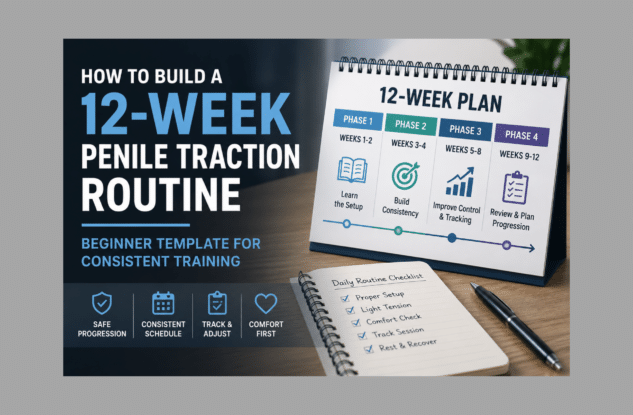
The first few weeks focus on learning the device and getting comfortable with the setup. The middle weeks focus on consistency, tracking, and small adjustments. The final weeks focus on reviewing progress, improving the routine, and deciding whether the user is ready for gradual progression.
For users working with the Compression Hanger, a 12-week routine should focus on correct sizing, wrapping, pad selection, alignment, light tension, comfort checks, and controlled progression.
The goal is not to force results in 12 weeks. The goal is to build a safer and more consistent routine that can be followed long-term.
Why Beginners Need a Routine Instead of Random Sessions
Random sessions make it difficult to understand what is working. If session time, tension, setup, rest days, and device use change constantly, users cannot identify patterns.
A structured routine helps users answer important questions.
- Is the device comfortable?
- Is the setup stable?
- Is slippage improving?
- Is recovery normal?
- Are sessions becoming easier to repeat?
- Is the user progressing too quickly?
Without tracking and structure, it becomes easy to mistake discomfort for progress. A good routine helps users stay realistic.
Start with Correct Sizing First
Before starting any traction routine, the sizing should be checked carefully. A device that is too loose may slip. A device that is too tight may create unnecessary pressure. Both situations can make the routine uncomfortable and inconsistent.
Users should not guess their size or choose a smaller size because they think it will create a better grip. The correct size should support comfort, stability, and safe use.
For users who need help with extended length and girth measurements, the Stealth Sizer Tool can help create a more accurate starting point before choosing a device.
Phase 1: Weeks 1–2 — Learn the Setup
The first two weeks should be focused on learning, not intensity.
During this phase, users should become familiar with the device, the fit, the wrap, the pads, the seal, or the support system, depending on the product being used. The main goal is to make each session feel controlled and predictable.
For compression-based traction, users should focus on wrapping smoothly, placing pads correctly, keeping the hanger centered, and testing the setup with very light tension before continuing.
For vacuum-based traction, users should focus on seal quality, chamber fit, suction comfort, and making sure the device does not slip or create uneven pressure.
The best outcome during the first two weeks is not a measurement change. The best outcome is learning how to use the device without discomfort.
Phase 1 Goals
Weeks 1 and 2 should help users understand how the device feels and how the body responds.
The goals are simple: learn the setup, avoid rushing, keep sessions short, track comfort, and stop immediately if warning signs appear.
Users should not increase intensity just because the first few sessions feel easy. Early comfort does not always mean the body is ready for more. The first phase is about patience.
Phase 2: Weeks 3–4 — Build Consistency
Weeks 3 and 4 are about building a repeatable schedule. At this point, users should still avoid aggressive progression. The focus should be on completing sessions consistently while keeping comfort stable.
This is also a good time to start noticing patterns. If slippage happens often, the setup may need adjustment. If discomfort appears after a certain session length, the routine may need shorter sessions or more rest.
Consistency means the routine feels manageable enough to repeat. A routine that feels too intense is less likely to last.
Phase 2 Goals
During weeks 3 and 4, users should aim to create a simple rhythm. They should track session length, comfort level, setup notes, rest days, and recovery.
If comfort remains stable, the user may continue with the same structure. If discomfort increases, this phase should be used to adjust the routine instead of adding intensity.
A smart beginner routine should feel boring in a good way: predictable, controlled, and easy to repeat.
Phase 3: Weeks 5–8 — Improve Control and Tracking
Weeks 5 through 8 are when users can start reviewing the routine more seriously. By now, they should have enough session notes to understand what setup feels best and what causes problems.
This phase is not about making big jumps. It is about improving control.
Users should review their tracking log and look for patterns. If slippage is decreasing, setup is improving. If comfort scores are stable, the routine may be manageable. If recovery is poor, the user may need more rest.
For users still struggling with setup, this guide on common compression hanger mistakes can help identify issues like poor wrapping, over-tightening, uneven pressure, and rushing progression.
Phase 3 Goals
The main goals for weeks 5 through 8 are better control, cleaner setup, and more consistent recovery.
Users can refine their wrapping method, adjust pad placement, improve alignment, or review suction quality if using a vacuum system. However, they should avoid making too many changes at once.
One change at a time is easier to track. If the user changes everything in the same week, it becomes difficult to know what helped.
Phase 4: Weeks 9–12 — Review and Refine
Weeks 9 through 12 are the review phase. By this point, users should have a clearer understanding of their comfort level, consistency, and recovery pattern.
This is the time to compare the current routine to the first month. Has the setup improved? Is the device easier to use? Is slippage reduced? Is recovery normal? Are sessions more consistent?
If the answer is yes, the routine may be ready for very gradual progression. If the answer is no, the user should focus on fixing the foundation before increasing time, tension, suction, or load.
The final phase should help users decide what comes next, not force them to move faster.
What to Track During the 12 Weeks
Tracking is one of the most important parts of the routine. It helps users make decisions based on real notes instead of memory or emotion.
A simple tracking log should include session date, device used, session duration, tension or weight level, wrap or seal notes, comfort rating, slippage, skin condition, recovery, and rest days.
Users can also take monthly measurements, but they should avoid measuring every day. Daily measuring can create confusion because normal body changes can cause temporary differences.
How Often Should You Measure?
Monthly measurement is usually more useful than daily measurement. It gives the routine enough time to show a more meaningful pattern and reduces stress over small fluctuations.
Users should measure under similar conditions each time. The same time of day, same room temperature, same measuring method, and same posture can make tracking more reliable.
The goal is not to obsess over numbers. The goal is to understand progress realistically.
Use Comfort Ratings After Each Session
Comfort is one of the best signs of whether a routine is sustainable.
Users can rate each session from 1 to 5.
- means uncomfortable.
- means mild discomfort.
- means manageable.
- means comfortable.
- means very stable and comfortable.
If comfort scores are dropping, the routine may be too intense or the setup may need adjustment. If scores remain stable, the current phase may be working well.
Rest Days Are Part of the Routine
Rest days should be treated as part of the plan, not as missed progress. A responsible routine gives the body time to recover.
If the user notices tenderness, irritation, swelling, numbness, or poor recovery, the routine should slow down. Adding more sessions when recovery is poor can make the routine harder to continue.
Rest supports consistency. A routine with proper recovery is usually easier to maintain than one that feels forced.
How to Progress Safely
Progression should be slow and based on comfort. Users should not increase session length, tension, suction, or load just because they want faster results.
A user may be ready for gradual progression only when the current routine feels stable over multiple sessions. The device should not slip. The pressure should feel even. Recovery should be normal. There should be no numbness, unusual discoloration, or pain.
If any warning signs appear, progression should stop. The user should rest, adjust the setup, or reduce intensity.
For a deeper safety breakdown, users can review the Stealth Compression Hanger safety guide.
Compression-Based Routine Considerations
A compression-based routine depends on grip, wrapping, pad selection, and alignment. The user should make sure the hanger sits straight and holds securely without needing excessive tightening.
The wrap should be smooth. The pads should feel balanced. The device should not tilt or shift under light tension.
If the hanger only stays in place when it is over-tightened, the setup needs adjustment before the routine progresses.
Vacuum-Based Routine Considerations
A vacuum-based routine depends on seal quality, chamber fit, suction comfort, and stable attachment.
For users using the Vac Hanger, the focus should be on building a consistent seal without excessive pressure. Air leaks, slipping, discomfort, or swelling may mean the setup needs adjustment.
Vacuum-based routines should also be progressed gradually. More suction does not automatically mean better results.
Daily Support Between Sessions
Some users prefer lower-intensity daily support between focused traction sessions. This can help with positioning, anti-turtling comfort, and routine consistency without adding a focused hanging session.
Stealth Innerwear can support discreet daily wear for users who want gentle support under clothing between structured sessions.
Daily support should still feel comfortable. If it causes irritation, pinching, or pressure, the fit should be reviewed.
What Beginners Should Avoid During the First 12 Weeks
Beginners should avoid rushing progression, skipping rest, ignoring warning signs, changing setup too often, and comparing themselves to advanced users.
They should also avoid treating discomfort as proof that the routine is working. Pain is not the goal. A responsible routine should feel controlled and repeatable.
The first 12 weeks should build a foundation, not test limits.
Warning Signs to Watch For
Users should stop immediately if they notice sharp pain, numbness, coldness, unusual discoloration, swelling, burning discomfort, loss of normal sensation, worsening irritation, or pressure that feels uneven or intense.
These signs may mean the device is too tight, the session is too long, the tension is too high, or the body needs rest.
If symptoms do not settle after stopping, or if the user has a medical condition, circulation issue, prior injury, or uncertainty about using traction devices, they should speak with a qualified healthcare professional.
How Science Supports a Gradual Routine
A gradual traction routine is built around controlled tension, consistency, tissue response, circulation, and recovery. The body generally responds better to steady, manageable routines than sudden aggressive force.
Users who want to understand the broader principles behind traction-based support can explore the science behind Stealth products.
Product Support and Common Questions
A 12-week routine can help users stay organized, but product-specific questions may still come up. Users may need support with sizing, fit, accessories, shipping, discreet packaging, or general usage guidance.
For common product questions, users can visit the official Stealth FAQ page.
Build a Consistent Routine with Stealth for Men
A good 12-week routine starts with the right device, the right size, and a patient approach. The goal is not to rush progress. The goal is to create a routine that feels safe, comfortable, and realistic enough to follow.
Stealth for Men offers discreet male enhancement products designed around fit, comfort, traction support, and long-term usability.
Explore the full Stealth product range to choose the option that best matches your routine, comfort level, and experience.
Final Thoughts
A 12-week penile traction routine should be treated as a foundation phase. The first month is for learning. The second month is for consistency and control. The third month is for reviewing, refining, and deciding whether gradual progression makes sense.
Users should focus on correct sizing, clean setup, comfort tracking, rest days, and warning signs. Measurements can be useful, but they should not be the only way progress is judged.
The best routine is not the most aggressive one. It is the one that can be followed consistently without discomfort, poor recovery, or constant adjustment.
By using a simple 12-week structure, beginners can build better habits, avoid common mistakes, and create a safer path toward long-term consistency.
FAQs
What is a 12-week penile traction routine?
A 12-week penile traction routine is a structured beginner plan that helps users learn setup, build consistency, track comfort, include rest days, and review progress over three months.
Should beginners increase tension every week?
No. Beginners should not increase tension automatically. Progression should only happen when the current routine feels stable, comfortable, and repeatable.
How often should I measure progress during a 12-week routine?
Monthly measurement is usually more useful than daily measurement. It helps reduce confusion from normal short-term changes.
What should I track during the routine?
Track session date, device used, session duration, tension or weight level, setup notes, comfort rating, slippage, skin condition, recovery, and rest days.
Are rest days important in penile traction?
Yes. Rest days help the body recover and should be included in any responsible traction routine.
What should I do if I feel numbness or pain?
Stop the session immediately. Remove the device carefully, rest, and review the setup before continuing. If symptoms do not settle, speak with a qualified healthcare professional.
Is a 12-week routine enough for results?
A 12-week routine is best viewed as a foundation phase. It helps users build consistency, learn setup, and create a safer long-term routine rather than chasing fast results.
 Share
Share
 Tweet
Tweet
 Pin
Pin