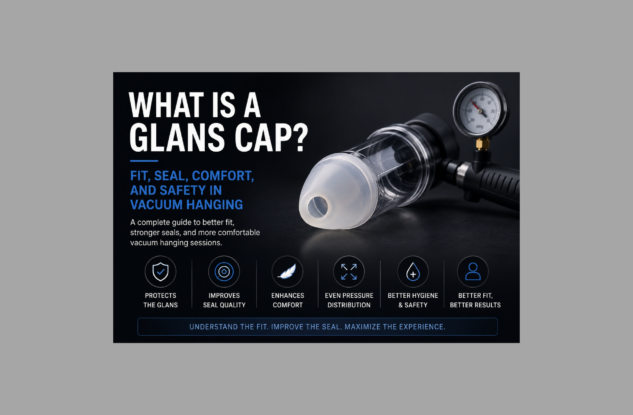
What Is a Glans Cap? Fit, Seal, Comfort, and Safety in Vacuum Hanging
 By Olivia Spring | 23 July 2026, in Self Improvement
A glans cap is one of the most important parts of a vacuum hanging setup. It helps protect the glans, support seal quality, improve comfort, and create a smoother connection between the body and the vacuum chamber.
For users new to vacuum hanging, the glans cap can feel like a small detail. In reality, it plays a major role in how the device feels during use. A poor glans cap fit may lead to air leaks, pressure points, discomfort, seal loss, or an unstable session. A better fit can make vacuum-based traction feel more controlled and consistent.
This guide explains what a glans cap is, how it works, why fit matters, how it supports vacuum seal quality, and what warning signs users should watch for during vacuum hanging.
What Is a Glans Cap?
A glans cap is a soft protective component used in some vacuum hanger systems. It sits over the glans and helps create a cushioned contact point inside the vacuum setup.
In a vacuum hanger routine, the glans cap is not just there for comfort. It also helps support the seal, reduce direct friction, and distribute pressure more evenly. This can make the vacuum attachment feel more stable during traction.
The Vac Hanger uses a vacuum-assisted design where chamber fit, seal quality, and comfort all matter. The glans cap is one of the components that help make that setup work more smoothly.
Why the Glans Cap Matters in Vacuum Hanging
Vacuum hanging depends on a secure seal. Without a stable seal, the device may lose suction, slip, or require frequent adjustment. The glans cap helps create a better contact surface so the vacuum system can hold more evenly.
It also helps reduce harsh contact between the glans and the chamber system. This matters because vacuum hanging should feel controlled, not sharp or painful.
A good glans cap supports four key goals:
- Comfort during use
- Better vacuum seal quality
- Reduced friction
- More even pressure distribution
When the glans cap fits correctly, users may find the setup easier to manage and more consistent across sessions.
How a Glans Cap Supports Seal Quality
Seal quality is one of the most important parts of vacuum hanging. The vacuum system needs to maintain stable pressure without constant leaks or sudden loss of suction.
The glans cap supports seal quality by helping the glans sit more securely inside the setup. It can reduce small gaps, improve contact, and support a more predictable vacuum environment.
If the glans cap is not seated correctly, the user may notice air leaks, slipping, pressure changes, or discomfort. This is why placement and fit should be checked before starting traction.
Glans Cap vs Vac-Seal: What Is the Difference?
A glans cap and a Vac-Seal are not the same thing, even though both support the vacuum system.
The glans cap sits over the glans and helps with comfort, contact, and pressure distribution.
The Vac-Seal helps create and maintain the air-tight seal needed for suction. It works with the chamber and other vacuum components to hold the device securely.
In simple terms, the glans cap protects and supports the glans area, while the Vac-Seal helps lock in the vacuum environment.
Both matter. If either one is fitted poorly, the vacuum hanger may feel less stable.
Fit Matters: Why Size and Placement Are Important
A glans cap should fit smoothly. It should not feel too tight, loose, folded, twisted, or uneven.
If it is too tight, it may create pressure or discomfort. If it is too loose, it may not support the seal properly. If it is placed unevenly, it can create pressure points or cause the device to sit incorrectly.
For users unsure about sizing, the Stealth Sizer Tool can help with extended length and girth measurements before choosing a Stealth device.
Correct sizing not only affects the chamber. It affects the entire vacuum hanger experience, including seal quality, pressure control, and comfort.
What a Good Glans Cap Fit Should Feel Like
A good glans cap fit should feel smooth, cushioned, and stable. It should not create sharp pressure or friction.
Users should feel that the cap is seated evenly. There should be no folding, pinching, or twisting. The cap should help the vacuum setup feel secure without creating a harsh squeeze.
A proper fit usually feels:
- Comfortable before suction
- Stable when the chamber is attached
- Even during light traction
- Free from sharp pressure points
- Secure without needing excessive suction
If the setup feels uncomfortable before traction begins, it should be adjusted before continuing.
Signs the Glans Cap May Be Too Tight
A glans cap may be too tight if the user feels pressure before the vacuum is even applied. Tightness can also make the session uncomfortable once suction begins.
Possible signs include:
- Pinching
- Sharp pressure
- Reduced sensation
- Coldness
- Discomfort that appears quickly
- Difficulty seating the cap properly
If the glans cap feels too tight, stop and reassess the setup. Do not try to force comfort by pushing through the session.
Signs the Glans Cap May Be Too Loose
A loose glans cap may not support the seal properly. This can make the vacuum system feel unstable.
Possible signs include:
- Air leaks
- Seal loss
- Slipping
- Uneven suction
- Frequent need to reset
- Poor chamber stability
If the cap feels loose or does not sit smoothly, the user should check placement, sizing, and the rest of the vacuum setup before continuing.
How the Glans Cap Affects Comfort
Comfort is one of the biggest reasons the glans cap matters. Vacuum systems can create pressure if the setup is not balanced. The glans cap helps reduce direct stress by adding a soft contact layer.
A well-fitted cap can make the session feel smoother and less harsh. It can also help reduce friction during setup and removal.
However, the glans cap cannot fix every issue. If suction is too strong, the chamber is the wrong size, or the session is too long, discomfort can still happen.
How the Glans Cap Affects Pressure Distribution
Pressure distribution means how evenly force is spread across the contact area. In vacuum hanging, uneven pressure can create hotspots, discomfort, or irritation.
The glans cap helps spread contact more evenly. This can reduce localized stress and support a more comfortable vacuum hold.
The guide on what a Stealth Vac Hanger is and how it works explains more about the role of the Glans-Cap, Vac-Seal, and chamber in the vacuum hanging setup.
Glans Cap and Airflow
In a vacuum hanger system, airflow and suction control are important. The glans cap should support the vacuum setup rather than block or distort it.
If the cap is folded, misaligned, or seated poorly, air movement may be affected. This can make it harder to create or maintain a stable seal.
Users should check that the cap is smooth and properly positioned before applying suction.
Glans Cap and Vacuum Chamber Fit
The glans cap works together with the vacuum chamber. If the chamber fit is wrong, the glans cap may not perform as expected.
A chamber that is too large may make the setup unstable. A chamber that is too small may create excessive pressure. The glans cap helps with comfort, but it cannot fully compensate for incorrect chamber sizing.
For the best experience, glans cap fit, chamber fit, and seal quality should all work together.
Common Glans Cap Setup Mistakes
One common mistake is rushing setup. If the cap is placed quickly without checking folds or alignment, it may create discomfort once suction begins.
Another mistake is using too much suction to fix a poor seal. If the setup leaks air, more pressure is not always the answer. The cap, seal, chamber, and placement should be checked first.
A third mistake is ignoring small discomfort early in the session. Small pressure points can become more noticeable over time, so the setup should feel good before traction begins.
How to Check the Glans Cap Before a Session
Before starting a vacuum hanging session, users should do a quick comfort and fit check.
The cap should sit smoothly. The edges should not be folded. The glans should feel cushioned, not squeezed. The chamber should attach without forcing the fit. Suction should build gradually and feel controlled.
If anything feels off, stop and reset the setup.
Glans Cap Cleaning and Hygiene
Because the glans cap contacts sensitive skin, cleaning matters. A clean cap helps reduce irritation, odor, and buildup.
Users should clean the glans cap according to product instructions. In general, gentle cleaning and full drying before storage can help keep the component in better condition.
Avoid harsh chemicals unless the product instructions specifically allow them. Strong cleaners may damage soft materials or cause skin irritation.
When to Replace a Glans Cap
A glans cap should be inspected regularly. Over time, soft materials can stretch, weaken, tear, or lose their original shape.
Users may need to replace the cap if they notice cracks, thinning, stickiness, loss of shape, rough edges, odor that does not clean away, or reduced seal performance.
A worn glans cap may affect comfort and vacuum stability, so it should not be ignored.
Glans Cap Safety Tips
The glans cap should improve comfort, not create pain. If the cap causes discomfort, pressure, numbness, coldness, or unusual color change, stop the session.
Users should never force the cap into place or continue if the setup feels wrong. Vacuum hanging should start with low intensity, controlled suction, and careful monitoring.
If pain, numbness, swelling, discoloration, or sensation changes do not settle after stopping, users should speak with a qualified healthcare professional.
Warning Signs During Vacuum Hanging
Stop the session immediately if you notice:
- Sharp pain
- Numbness
- Coldness
- Unusual discoloration
- Swelling
- Burning discomfort
- Loss of normal sensation
- Skin irritation
- Seal failure that causes slipping
- Pressure that feels uneven or intense
These signs may mean the cap, chamber, seal, suction level, or session duration needs adjustment.
Glans Cap vs Compression Grip
A glans cap is usually part of a vacuum-based setup. A compression hanger works differently.
A compression hanger uses grip, wrapping, traction pads, and controlled pressure. A vacuum hanger uses suction, seal quality, chamber fit, and components like the glans cap.
Users comparing both styles can read this guide on Compression Hanger vs Vacuum Hanger to better understand which setup may match their comfort preference.
Does a Glans Cap Improve Vacuum Hanging Comfort?
A properly fitted glans cap can improve comfort by cushioning contact, supporting pressure distribution, and helping the vacuum setup feel more stable.
However, comfort still depends on the full setup. Chamber size, suction level, seal quality, session duration, traction level, and recovery all matter.
The article on the benefits of using the Stealth Vac Hanger explains how soft materials, seal design, and ergonomic contact points can support comfort during vacuum-based routines.
How the Glans Cap Fits into a Long-Term Routine
A glans cap can make vacuum hanging easier to repeat because it supports a more comfortable contact point. This matters because consistency depends on comfort.
If a device feels harsh, unstable, or difficult to seal, users are less likely to follow the routine. If the cap, seal, and chamber work together smoothly, sessions may feel more manageable.
Users who want to understand the broader principles behind traction, tissue response, circulation, and recovery can explore the science behind Stealth products.
Product Support and Common Questions
Vacuum hanging involves several components, so users may still have questions about sizing, seal quality, replacement parts, cleaning, compatibility, shipping, or discreet packaging.
For general product help, users can visit the official Stealth FAQ page.
Choose a Better Vacuum Hanging Setup with Stealth for Men
A strong vacuum hanging routine starts with the right fit, stable seal, clean setup, and careful comfort checks. The glans cap may be a small component, but it plays a major role in how the device feels during use.
Stealth for Men offers discreet male enhancement products designed around fit, comfort, support, and long-term usability.
Explore Stealth products to find the setup that best matches your routine, comfort needs, and experience level.
Final Thoughts
A glans cap is an important part of a vacuum hanger system. It helps protect the glans, support seal quality, reduce friction, and distribute pressure more evenly during vacuum-based traction.
The right glans cap fit should feel smooth, secure, and comfortable. It should not pinch, fold, slip, or create harsh pressure. If the cap feels too tight, too loose, or uncomfortable, the setup should be adjusted before continuing.
For the best vacuum hanging experience, users should focus on correct sizing, proper placement, clean components, controlled suction, and careful safety checks.
FAQs
What is a glans cap?
A glans cap is a soft protective component used in some vacuum hanger systems. It sits over the glans and helps support comfort, seal quality, and pressure distribution.
Why is a glans cap important in vacuum hanging?
A glans cap helps create a smoother contact point, supports the vacuum seal, reduces friction, and helps distribute pressure more evenly.
Should a glans cap feel tight?
A glans cap should feel secure, but not painfully tight. If it causes pinching, numbness, coldness, or sharp pressure, stop and reassess the fit.
Can a loose glans cap cause air leaks?
Yes. If the glans cap is too loose or poorly seated, it may contribute to air leaks, seal loss, or slipping during vacuum hanging.
How do I know if my glans cap fits correctly?
A good fit should feel smooth, cushioned, stable, and even. It should not fold, twist, pinch, or create pressure points.
How often should I clean a glans cap?
Clean it after use according to the product instructions. Gentle cleaning and proper drying can help protect comfort and hygiene.
When should I replace a glans cap?
Replace it if you notice cracks, thinning, loss of shape, rough edges, reduced seal performance, or signs of material wear.
 Share
Share
 Tweet
Tweet
 Pin
Pin