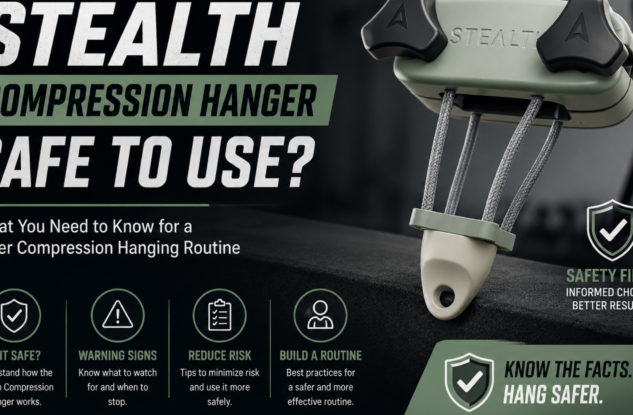
Is the Stealth Compression Hanger Safe to Use?
 By Olivia Spring | 9 June 2026, in Self Improvement
Safety is one of the first questions men ask before using any compression hanger, penile hanger, or penile traction device. That is understandable. A traction device is applied to a sensitive area, so comfort, fit, pressure, circulation, and correct use matter.
The honest answer is this: the Stealth Compression Hanger by Stealth For Men is designed with safety-focused features, but no compression hanger or penile traction device is risk-free. Safe use depends on correct sizing, proper setup, gradual progression, body awareness, and stopping immediately if warning signs appear.
The Stealth Compression Hanger uses a precision compression grip system, interchangeable silicone traction pads, a reusable traction wrap, and an integrated stabilization platform. The product page also states that every kit includes a user guide and logbook with a beginner-friendly 3-month routine template.
This guide explains how to use the Stealth Compression Hanger more responsibly, what safety features matter, what mistakes to avoid, and when to stop a session.
This article is educational and does not replace medical advice. Anyone with penile pain, injury, Peyronie’s disease, erectile dysfunction, circulation issues, skin conditions, recent surgery, or other health concerns should speak with a qualified healthcare professional before using any penile traction device.
Quick Answer: Is the Stealth Compression Hanger Safe?
The Stealth Compression Hanger can be used more safely when it is fitted correctly, wrapped properly, adjusted conservatively, and used according to the instructions. It is designed to support controlled compression-based traction, not aggressive or careless hanging.
However, safety is not only about the device. It is also about the user’s routine.
A compression hanger may become unsafe if you:
- Use the wrong size
- Wrap incorrectly
- Over-tighten the device
- Start with too much weight
- Ignore pain or numbness
- Continue through discoloration
- Skip rest and recovery
- Increase session intensity too quickly
- Use the device without reading the instructions
The safest approach is to start slow, focus on comfort, check alignment, track sessions, and stop immediately if something feels wrong.
What Makes a Compression Hanger Different From Other Penile Traction Devices?
A compression hanger works differently from a vacuum hanger or strap-based traction device.
A vacuum hanger uses suction to create attachment. A compression hanger uses controlled pressure, wrapping, and traction pads to create a secure grip. This means the safety of a compression hanger depends heavily on pressure control and fit.
With the Stealth Compression Hanger, the goal is to create stable traction without relying on vacuum suction. The device is designed around compression grip, silicone traction pads, wrapping support, and stabilization.
This can be beneficial for users who want a more direct mechanical grip, but it also means they must avoid over-tightening. A secure grip should not feel painful, cold, numb, or sharply compressed.
Compression hanging should feel controlled, not forced.
Why Safety Matters With the Stealth Compression Hanger
The penis contains sensitive tissue, blood vessels, nerves, and skin. Any traction device must be used with care because excessive pressure, poor fit, or improper setup may cause discomfort or irritation.
Research on penile traction therapy, mostly in Peyronie’s disease contexts, has generally described reported adverse effects as mild or temporary, such as redness, discomfort, discoloration, swelling, or numbness.
That does not mean every device is automatically safe for every user. It means responsible use matters. Correct technique, gradual progression, and stopping when warning signs appear are essential.
At Stealth For Men, the Stealth Compression Hanger is built for controlled traction. But even a well-designed device must be used correctly.
Safety Feature 1: Interchangeable Traction Pads
One of the most important safety-focused features of the Stealth Compression Hanger is its interchangeable traction pad system.
Fit matters because every user is different. If the device is too loose, it may slip. If it is too tight, it may create excessive pressure. The Stealth Compression Hanger includes four sets of interchangeable traction pads so users can adjust the grip channel and create a more personalized fit.
The benefit of adjustable pads is that users do not have to force one fixed setup. They can test different configurations and choose the one that feels secure without causing pain or numbness.
A proper pad setup should feel:
- Secure
- Balanced
- Stable
- Comfortable
- Evenly distributed
It should not feel sharp, crushing, cold, or painful.
Safety Feature 2: Three-Phase Traction Wrap
Wrapping is one of the most important parts of compression hanger safety.
The wrap creates a protective layer between the body and the compression system. A good wrap can help reduce friction, improve comfort, and support more even pressure distribution.
The Stealth Compression Hanger product page describes its three-phase traction wrap as soft, reusable, and made from medical-grade material designed to reduce pressure points and support extended wear.
However, the wrap must be applied correctly. If the wrap is uneven, too loose, too tight, twisted, or bunched up, it can affect both comfort and grip.
A safe wrap should be smooth and even. It should not create ridges, folds, or hard pressure spots.
Safety Feature 3: Stabilization Platform
Device tilt is a common issue with penile hanging devices. When a hanger tilts, rotates, or pulls unevenly, pressure may become concentrated in one area.
The Stealth Compression Hanger includes an integrated stabilization platform with embedded para-cords designed to help maintain balance and straight-line traction.
This matters because stable alignment supports a more controlled hanging experience. A stable device is easier to monitor, easier to track, and less likely to shift unexpectedly during a session.
Before every session, users should check that the device feels balanced and aligned. If the device tilts or pulls unevenly, stop and reset the setup.
Safety Feature 4: User Guide and Logbook
A safe traction routine requires structure. Many beginners make the mistake of guessing instead of following a plan.
The Stealth Compression Hanger includes a comprehensive user guide and logbook with a beginner-friendly 3-month routine template.
This is important because tracking helps users stay consistent and avoid sudden jumps in intensity. A logbook can help record:
- Date
- Session time
- Weight used
- Pad setup
- Wrap method
- Comfort level
- Warning signs
- Adjustments made
Tracking is one of the simplest ways to avoid overtraining. It also helps users understand which setup feels best over time.
The Biggest Safety Risk: User Error
Most safety problems with compression hanging come from user error, not just device design.
The most common errors include:
- Starting too heavy
- Tightening too much
- Wrapping poorly
- Using the wrong pad setup
- Ignoring discomfort
- Increasing too quickly
- Not checking circulation
- Continuing after warning signs
For a deeper breakdown, read our guide on Common Mistakes to Avoid When Using a Compression Hanger.
The key point is simple: the Stealth Compression Hanger is designed for controlled use, but the user must respect the setup process.
Warning Signs to Stop Immediately
This is one of the most important sections of this blog.
Stop using the Stealth Compression Hanger immediately if you notice:
- Pain
- Numbness
- Tingling
- Coldness
- Blue, purple, or dark discoloration
- Swelling
- Sharp pressure
- Burning sensation
- Skin irritation
- Loss of sensation
- Unusual discomfort
- Any change that feels wrong
Do not try to “push through” these signs. Pain and numbness are not signs of progress. They are signs to stop, remove the device, and reassess.
If symptoms do not resolve or if you are concerned, seek medical guidance.
How Beginners Can Use the Stealth Compression Hanger More Safely
Beginners should focus on learning, not intensity.
The first goal is not heavier weight. The first goal is proper setup.
Start With the Correct Size
Sizing affects comfort and safety. If the device does not fit correctly, it can slip or create pressure problems. Measure carefully and follow the product guidance.
Learn the Wrap First
Do not rush the wrap. A clean, even wrap helps reduce friction and pressure points.
Choose the Right Traction Pads
Use the traction pads to create a fit that feels secure but not painfully tight. Do not force a pad setup that creates numbness or discomfort.
Begin Conservatively
Beginners should avoid aggressive weight or long sessions. Start slowly and increase only when the setup feels consistently comfortable.
Track Every Session
Use the logbook to record what you did and how it felt. This helps prevent overuse and makes your routine easier to manage.
How Experienced Users Can Stay Safe
Experienced users may understand compression hanging better, but they still need to follow safety principles.
Experience can sometimes lead to overconfidence. Advanced users may increase weight too quickly, use longer sessions, or ignore mild warning signs because they assume they know their limits.
Even experienced users should:
- Check the wrap every time
- Inspect the device before use
- Confirm alignment
- Avoid over-tightening
- Track changes in comfort
- Use gradual progression
- Take warning signs seriously
A smart routine is always better than an aggressive routine.
Who Should Be Extra Careful Before Using a Compression Hanger?
Some users should be especially cautious before using any penile traction device.
Speak with a qualified healthcare professional first if you have:
- Penile pain
- Peyronie’s disease
- Erectile dysfunction
- Nerve sensitivity issues
- Circulation problems
- Blood clotting disorders
- Diabetes-related circulation concerns
- Skin irritation or infection
- Recent penile or pelvic surgery
- History of injury
- Any unexplained symptoms
This does not mean every person with these conditions can never use traction. It means professional guidance is important before starting.
Safety should always come before curiosity or fast results.
Is the Stealth Compression Hanger Safer Than a Vacuum Hanger?
It depends on the user and how the device is used.
A compression hanger and a vacuum hanger have different safety considerations. A compression hanger requires careful pressure control, wrap quality, and pad selection. A vacuum hanger requires proper chamber fit, seal quality, and suction control.
Neither system is automatically safer for every user. The safer option is the one that fits properly, feels comfortable, is used according to instructions, and matches the user’s experience level.
Some men may prefer a compression grip because it feels more direct and stable. Others may prefer vacuum-assisted traction because it feels different and uses suction rather than mechanical compression.
If you are still deciding between devices, you can compare options through Stealth For Men product information and user experiences on the Stealth For Men reviews page.
Can the Stealth Compression Hanger Cause Injury?
Any penile traction device can potentially cause discomfort or injury if used incorrectly. This includes compression hangers, vacuum hangers, extenders, and other traction systems.
The main risks usually come from:
- Too much pressure
- Too much weight
- Poor alignment
- Bad wrapping
- Wrong sizing
- Overuse
- Ignoring warning signs
The Stealth Compression Hanger is designed with safety-focused features, but those features cannot replace responsible use.
Think of the device as a tool. A well-designed tool can support better control, but it must still be used correctly.
What Does “Safe Use” Really Mean?
Safe use does not mean there is zero risk. It means the user reduces unnecessary risk through correct technique, conservative progression, and awareness.
Safe use means:
- Reading the instructions
- Measuring correctly
- Using the right pad setup
- Wrapping evenly
- Avoiding excessive pressure
- Starting with light intensity
- Checking alignment
- Monitoring circulation and sensation
- Tracking sessions
- Taking rest days
- Stopping immediately when warning signs appear
The safest users are usually the ones who are patient, consistent, and careful.
Final Verdict
The Stealth Compression Hanger by Stealth For Men is designed to support controlled compression-based traction through adjustable pads, a traction wrap, stabilization support, and a beginner-friendly guide and logbook.
So, is it safe to use?
It can be used more safely when users follow the instructions, start conservatively, choose the correct fit, wrap properly, avoid over-tightening, progress gradually, and stop immediately if warning signs appear.
But it should not be treated as risk-free. A compression hanger is a serious traction device, and safe use depends heavily on the user’s setup and judgment.
For beginners, the best approach is simple: go slow, stay controlled, track every session, and never ignore discomfort, numbness, discoloration, or pain.
The Stealth Compression Hanger can be a strong choice for men who want a controlled compression-based traction system, but safety must always come before intensity.
FAQs
1. Is the Stealth Compression Hanger safe for beginners?
Yes, the Stealth Compression Hanger can be suitable for beginners when used carefully and according to instructions. Beginners should start slowly, use the correct size, wrap properly, choose the right traction pads, and avoid increasing weight or session time too quickly.
2. What are the warning signs to stop using a compression hanger?
Stop immediately if you experience pain, numbness, tingling, coldness, swelling, discoloration, sharp pressure, burning, skin irritation, loss of sensation, or any unusual discomfort.
3. Can a compression hanger cause numbness?
Numbness can happen if the device is too tight, the wrap is uneven, the pressure is excessive, or the session is too intense. Numbness should not be ignored. Stop the session immediately and reassess your setup.
4. How can I make the Stealth Compression Hanger safer to use?
Use the correct size, wrap evenly, select the right traction pads, avoid over-tightening, start conservatively, check alignment, track sessions, and stop immediately if any warning signs appear.
5. Should I talk to a doctor before using a penile traction device?
You should speak with a healthcare professional before using any penile traction device if you have penile pain, Peyronie’s disease, erectile dysfunction, circulation issues, diabetes-related concerns, skin problems, recent surgery, or any medical condition that could affect safe use.
 Share
Share
 Tweet
Tweet
 Pin
Pin