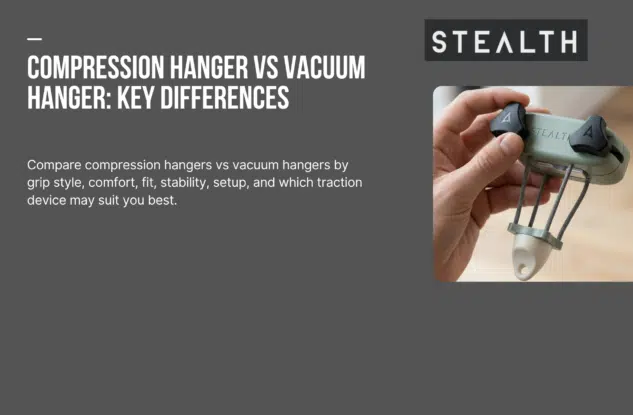
Compression Hanger vs Vacuum Hanger: Key Differences Explained
 By Olivia Spring | 5 June 2026, in Self Improvement
Choosing between a compression hanger and a vacuum hanger is one of the most common decisions men face when researching penile traction devices. Both systems are designed to support traction-based hanging routines, but they work in very different ways.
A compression hanger uses controlled mechanical grip and pressure distribution. A vacuum hanger uses suction or vacuum-assisted attachment to create a secure hold. While both can be used for traction routines, the setup process, comfort level, grip feel, stability, learning curve, and user preference can vary significantly.
At Stealth For Men, both options are available because different users have different needs. Some men prefer the direct grip and mechanical control of the Stealth Compression Hanger, while others prefer the suction-based design of the Stealth Vac Hanger. The Stealth Compression Hanger product page describes a precision compression grip system with interchangeable silicone traction pads, while the Stealth Vac Hanger page describes vacuum-assisted traction with custom-sized vacuum chambers and secure suction support.
This guide explains the key differences between a compression hanger and a vacuum hanger so you can better understand which traction device may be the right fit for your routine, comfort level, and experience.
Before using any penile traction device, always follow the product instructions carefully. Stop immediately if you experience pain, numbness, discoloration, swelling, coldness, or unusual discomfort. This article is educational and does not replace medical advice.
What Is a Compression Hanger?
A compression hanger is a penile traction device that uses controlled compression to create a secure grip. Instead of relying on suction, the device applies pressure around the shaft through a mechanical grip system, traction pads, wrapping, and an attachment point.
The purpose of a compression hanger is to create stable traction while maintaining control over pressure and alignment. With a product like the Stealth Compression Hanger by Stealth For Men, the grip is supported by interchangeable traction pads, a reusable wrap, and an integrated stabilization platform. The product page states that it includes four sets of traction pads, a three-phase traction wrap, and a stabilization platform designed to maintain straight-line traction.
In simple terms, a compression hanger is often chosen by users who want:
- A direct mechanical grip
- Adjustable compression control
- A secure traction setup
- Less dependence on vacuum suction
- A stable hanging feel
- Customizable fit through pads and wrapping
Because compression hanging depends heavily on setup, correct sizing and careful adjustment are very important.
What Is a Vacuum Hanger?
A vacuum hanger is a penile traction device that uses suction to create attachment. Instead of clamping through compression alone, a vacuum hanger creates an air-tight seal and uses vacuum pressure to help hold the device in place.
The Stealth Vac Hanger by Stealth For Men is designed as a vacuum-assisted traction system. Its product page describes custom-sized vacuum chambers, glans caps, Vac-Seals, spare valves, O-rings, a vacuum pump, traction cord, and other support components.
A vacuum hanger is often chosen by users who want:
- Vacuum-assisted grip
- A suction-based attachment method
- A more enclosed chamber design
- Custom chamber sizing
- Long-duration wear potential
- A different comfort profile compared with compression grip
Vacuum hangers can feel different from compression hangers because the holding force comes mainly from suction and seal quality rather than direct compression.
Compression Hanger vs Vacuum Hanger: Quick Comparison
| Feature | Compression Hanger | Vacuum Hanger |
| Main grip method | Compression grip | Vacuum suction |
| Attachment style | Mechanical pressure and traction pads | Air-tight seal and vacuum chamber |
| Fit adjustment | Pads, wrap, and sizing | Chamber size, seal, and vacuum pressure |
| Setup focus | Wrapping, pad choice, compression level | Seal quality, chamber fit, suction control |
| Common appeal | Direct grip, stability, control | Suction-based comfort, chamber support |
| Learning curve | Learning wrap and pressure balance | Learning seal and vacuum setup |
| Best for | Users who prefer controlled compression | Users who prefer vacuum-assisted traction |
Both systems can be effective tools for structured traction routines when used properly, but the right choice depends on your preference, anatomy, comfort level, and experience.
Key Difference 1: Grip Method
The biggest difference between a compression hanger and a vacuum hanger is the grip method.
A compression hanger uses controlled pressure. The user wraps, positions the device, selects the right traction pads, and adjusts the compression grip. The goal is to create a secure hold without over-tightening.
A vacuum hanger uses suction. The device typically includes a chamber and seal system that creates vacuum pressure. The goal is to maintain a stable air-tight attachment without losing suction.
This difference matters because grip style affects the entire user experience. A compression hanger may feel more direct and mechanical. A vacuum hanger may feel more suction-based and enclosed.
For men comparing a penis hanger, penile hanger, or penile traction device, this is usually the first decision to understand: do you prefer compression grip or vacuum-assisted grip?
Key Difference 2: Setup Process
The setup process is another major difference.
With a compression hanger, setup usually focuses on:
- Choosing the correct size
- Wrapping evenly
- Selecting the right traction pads
- Positioning the device properly
- Adjusting compression pressure
- Checking alignment before adding weight
With a vacuum hanger, setup usually focuses on:
- Choosing the right chamber size
- Creating a proper seal
- Using the vacuum pump correctly
- Checking suction stability
- Making sure the device does not lose pressure
- Confirming comfort before starting traction
The Stealth Compression Hanger includes a user manual and logbook with a beginner-friendly 3-month routine template, while the Stealth Vac Hanger includes a detailed user guide and beginner-friendly templates.
Both systems require patience. Neither should be rushed. A poor setup can lead to slipping, discomfort, uneven pressure, or an inconsistent traction session.
Key Difference 3: Comfort Feel
Comfort is personal. Some users prefer compression, while others prefer vacuum.
A compression hanger creates comfort through fit control, wrap quality, pad selection, and even pressure distribution. If the wrap is uneven or the compression is too tight, it may feel uncomfortable. If the setup is correct, users often appreciate the stable and controlled feel.
A vacuum hanger creates comfort through chamber fit, seal quality, and suction control. If the seal is poor or suction is too strong, it may feel uncomfortable. If the chamber fit is correct and suction is controlled, some users prefer the reduced clamp-style feel.
The Stealth Compression Hanger product page highlights its medical-grade reusable wrap and silicone traction pads for pressure reduction and comfort, while the Stealth Vac Hanger page highlights soft medical-grade materials and vacuum-assisted support.
The important point is that comfort depends on correct use. Even a premium traction hanger can feel uncomfortable if the setup is rushed or the wrong size is selected.
Key Difference 4: Fit and Sizing
Sizing is critical for both compression hangers and vacuum hangers.
The Stealth Compression Hanger is available in two sizes and includes four sets of interchangeable traction pads. This allows users to adjust the grip channel and create a more personalized compression fit.
The Stealth Vac Hanger offers a broader sizing system, with the product page stating that users can choose from 16 different sizes and that each kit includes three custom-sized chambers with a corresponding glans cap and Vac-Seal.
This means compression fit and vacuum fit are managed differently.
With a compression hanger, the user adjusts the internal grip using pads and wrapping. With a vacuum hanger, the user depends more on chamber sizing, seal quality, and vacuum pressure.
If you are choosing between the two, sizing should not be guessed. Accurate measurement helps improve comfort, stability, and safety.
Key Difference 5: Stability During Hanging
Stability is one of the biggest reasons users compare compression hangers and vacuum hangers.
A compression hanger like the Stealth Compression Hanger is designed with a stabilization platform that helps maintain straight-line traction. The product page states that the integrated stabilization platform uses embedded para-cords to help prevent device tilt and maintain balance.
A vacuum hanger like the Stealth Vac Hanger focuses stability around suction, seal quality, and secure chamber attachment. Its product page describes a vacuum chamber system, lock seal support, and vacuum-assisted traction design.
Both designs aim for stability, but they approach the problem differently.
Compression stability comes from mechanical grip and alignment. Vacuum stability comes from suction integrity and chamber fit.
Key Difference 6: Learning Curve
Both devices have a learning curve, but the learning process is different.
A compression hanger requires users to learn:
- How to wrap correctly
- How to choose traction pads
- How much compression is enough
- How to avoid over-tightening
- How to check alignment
- How to progress gradually
A vacuum hanger requires users to learn:
- How to create a proper seal
- How to use the vacuum pump
- How to monitor suction comfort
- How to maintain vacuum components
- How to prevent air leaks
- How to choose the correct chamber size
Neither system is difficult once you understand it, but beginners should expect a learning period. This is why instructions, templates, and tracking tools matter.
Key Difference 7: Maintenance
Maintenance is another factor to consider.
A compression hanger generally requires care for the clamp, traction pads, wrap, attachment parts, and any support materials. Since the device uses direct contact and compression, users should keep the pads and wrap clean and inspect them regularly.
A vacuum hanger may require additional maintenance because of vacuum components. Chambers, seals, valves, O-rings, tubing, and the vacuum pump should be checked to make sure the system holds suction properly.
The Stealth Vac Hanger kit includes spare valves and spare O-rings, which shows that vacuum systems have seal-related components that need attention over time.
A good rule for both devices is simple: clean the device, inspect parts before each session, and replace worn components when needed.
Key Difference 8: Price and Product Complexity
Compression hangers and vacuum hangers can also differ in price and complexity.
The Stealth Compression Hanger is listed at $225, while the Stealth Vac Hanger is listed at $369 on the current product pages.
That price difference makes sense when you compare the systems. The vacuum hanger kit includes more vacuum-specific components such as chambers, glans caps, Vac-Seals, a pump, tubing, spare valves, spare O-rings, and a pulley. The compression hanger kit is more focused on compression grip, traction pads, wrap, carabiner support, and stabilization.
This does not automatically mean one is better than the other. It means they are built differently and serve different user preferences.
Which One Is Better for Beginners?
There is no one-size-fits-all answer.
A beginner may prefer a compression hanger if he wants:
- A more direct grip system
- Fewer vacuum-specific parts
- Adjustable traction pads
- Mechanical control
- A stable compression-based setup
A beginner may prefer a vacuum hanger if he wants:
- Vacuum-assisted attachment
- A chamber-based system
- A suction-style grip
- More sizing options
- A different comfort profile
The best choice depends on which setup feels more intuitive and comfortable. For some men, compression grip feels more controlled. For others, vacuum suction feels more comfortable.
At Stealth For Men, the goal is not to force every user into the same device. The goal is to provide high-quality traction options so each user can choose the system that matches his routine, experience level, and comfort preferences.
Safety Considerations for Both Devices
Whether you choose a compression hanger or vacuum hanger, safety should always come first.
Penile traction therapy has been studied mostly in medical contexts such as Peyronie’s disease. Reviews and expert summaries generally report that side effects are often mild and may include discomfort, temporary numbness, skin discoloration, mild pain, or swelling.
That does not mean every traction device is risk-free. It means correct use, gradual progression, proper fit, and stopping when warning signs appear are extremely important.
Stop immediately if you notice:
- Pain
- Numbness
- Coldness
- Blue, purple, or dark discoloration
- Swelling
- Sharp pressure
- Loss of sensation
- Skin irritation
- Unusual discomfort
Do not continue a session just because you planned a certain time or weight. If something feels wrong, stop and reassess your setup.
Which Device Should You Choose?
Choose a compression hanger if you want a traction device that focuses on direct mechanical grip, compression control, interchangeable pads, wrapping, and alignment stability.
Choose a vacuum hanger if you want a traction device that focuses on suction, chamber fit, air-tight sealing, and vacuum-assisted support.
The Stealth Compression Hanger may be a better fit for users who prefer a controlled compression grip and want a more direct hanging feel. The Stealth Vac Hanger may be a better fit for users who prefer vacuum-assisted traction and a chamber-based setup.
Before making a decision, it may also help to read Stealth For Men reviews to understand how real users describe their experiences with Stealth products. The reviews page states that Stealth has earned the trust of thousands of men worldwide over the past 15 years and includes hundreds of customer reviews.
Final Thoughts
When comparing a compression hanger vs vacuum hanger, the biggest difference is how each device creates grip.
A compression hanger uses controlled pressure, traction pads, wrapping, and mechanical grip. A vacuum hanger uses suction, chamber fit, and air-tight sealing. Both can support traction routines, but they offer different setup experiences, comfort profiles, maintenance needs, and learning curves.
The Stealth Compression Hanger by Stealth For Men is designed for men who want a secure compression-based traction system with adjustable pads and stabilization support. The Stealth Vac Hanger is designed for men who prefer vacuum-assisted traction with custom chambers and suction-based attachment.
The right choice depends on your body, comfort preference, experience level, and routine style. Start carefully, follow instructions, track your sessions, and always prioritize safety over intensity.
FAQs
1. What is the main difference between a compression hanger and a vacuum hanger?
The main difference is the grip method. A compression hanger uses controlled pressure and traction pads to create grip, while a vacuum hanger uses suction and an air-tight chamber system to create attachment.
2. Is a compression hanger better than a vacuum hanger?
A compression hanger is not automatically better than a vacuum hanger. It depends on user preference. Some men prefer the direct grip and stability of compression hanging, while others prefer the suction-based feel of a vacuum hanger.
3. Is the Stealth Compression Hanger good for beginners?
Yes, the Stealth Compression Hanger can be suitable for beginners when used carefully and according to instructions. Beginners should focus on correct sizing, proper wrapping, pad selection, conservative progression, and safety signs.
4. Does a vacuum hanger use compression?
A vacuum hanger primarily uses suction, but some designs may also include support elements that help improve stability. The main difference is that vacuum hangers depend on air-tight seal and vacuum pressure, while compression hangers depend on mechanical grip and pressure distribution.
5. Which Stealth For Men product should I choose?
Choose the Stealth Compression Hanger if you prefer compression grip, adjustable traction pads, and a direct mechanical feel. Choose the Stealth Vac Hanger if you prefer vacuum-assisted traction, chamber sizing, and suction-based attachment. Both options should be used carefully with proper setup and safety awareness.
 Share
Share
 Tweet
Tweet
 Pin
Pin