Girth vs. Length Goals, How Men Should Choose the Right Enhancement Support
 By Olivia Spring | 15 September 2026, in Self Improvement
Many men begin searching for male enhancement with one question in mind: should they focus on girth, length, or overall confidence? The answer is not always simple because every man has a different goal. Some want a longer flaccid profile under clothing. Some want better daily support. Some are interested in traction-based routines. Others simply want to reduce turtling, feel more comfortable, and stop worrying about how their body looks or feels during the day.
Length and girth are often discussed together, but they are not the same goal. They may require different types of support, different routines, and different expectations. Choosing the wrong approach can lead to frustration, poor comfort, or unrealistic expectations.
This guide explains the difference between girth and length goals, how men should think about enhancement support, and how to choose a product or routine based on comfort, fit, safety, and daily usability.
Understanding the Difference Between Girth and Length Goals
Length usually refers to how far the penis extends, either in a flaccid or erect state. For many men, length goals are connected to flaccid hang, anti-turtling support, or traction-based routines that focus on gentle extension over time.
Girth refers to thickness or circumference. Some men think more about fullness, volume, or how supported the shaft feels. Girth goals can be more complex because not every male enhancement support product is designed to target girth directly.
The important thing is to understand the real goal behind the search. A man may say he wants length, but what he actually wants is less turtling under clothing. Another man may say he wants girth, but what he really wants is a fuller-looking profile or more confidence in fitted clothing. Once the real goal is clear, choosing the right support becomes much easier.
Why Men Should Not Choose Based on Size Alone
Male enhancement is often marketed around size, but size alone is not the full story. Comfort, confidence, support, fit, and consistency matter just as much. A product that sounds impressive but feels uncomfortable will not become part of a long-term routine.
Some men may benefit most from daily support. Others may need a more structured traction routine. Some may only need better sizing or a product that reduces retraction. The right choice depends on what the user wants to feel and experience every day, not only on a number.
A realistic routine should focus on support that feels comfortable, private, and manageable. If the routine creates pain, stress, or pressure to chase fast results, it is not the right approach.
Length Goals and Flaccid Profile
For many men, length goals are connected to flaccid profile. Flaccid profile means how the penis rests and appears under clothing when not erect. This can change throughout the day because of temperature, stress, movement, clothing pressure, and natural body response.
A man may feel confident when relaxed and warm, then notice more retraction in cold weather, during exercise, or while sitting for long periods. This does not always mean something is wrong. Flaccid size naturally changes. However, frequent turtling or retraction can still affect confidence and comfort.
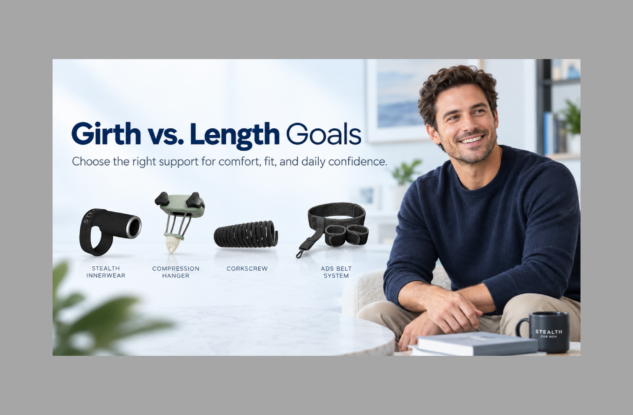
For men whose main concern is flaccid retraction, daily support may be more relevant than an aggressive traction routine. A product like Stealth Innerwear is designed to support a more extended flaccid profile and help reduce unwanted turtling during daily wear.
Length Goals and Traction-Based Support
Some men are interested in length-focused routines that involve controlled traction. Traction-based support is different from simply wearing supportive innerwear. It usually requires more structure, more setup, and more attention to safety.
A length-focused traction routine should be gradual. It should never begin with heavy tension, long sessions, or discomfort. The body needs time to adapt, and users need time to learn the device, check fit, and understand warning signs.
For users who prefer a compression-based approach, the Compression Hanger is designed around controlled grip, traction pads, alignment, and session-based use. This type of product is better suited for men who want a focused routine rather than simple daily support.
Vacuum-Based Length Support
Some users prefer suction-based traction over compression-based grip. Vacuum-assisted systems are designed to create a seal that helps attach the device before controlled traction is applied.
This approach may appeal to men who do not want a compression-style grip, but it still requires careful setup. Seal quality, suction comfort, chamber fit, pressure control, and recovery all matter. More suction does not mean better progress. A good vacuum routine should feel stable, controlled, and comfortable.
For men who are interested in vacuum-assisted traction, the Vac Hanger may be a better match than a compression-based device, depending on comfort preference and routine style.
Where Girth Goals Fit In
Girth goals are different from length goals because they are often connected to fullness, thickness, or a stronger visual profile. Many men who search for girth improvement may also be thinking about confidence under clothing, sexual confidence, or how their body feels in a flaccid state.
It is important to be careful with expectations. Not every product is designed to increase girth, and no responsible routine should promise fast or guaranteed changes. Men should avoid products that make unrealistic claims or suggest that discomfort is required for progress.
If the real goal is a fuller-looking daily profile, then support and positioning may be more relevant than chasing girth directly. If the goal is a structured enhancement routine, the user should understand what each device is designed to support before choosing.
Girth, Support, and Comfort
Girth-related confidence is not always about changing the body. Sometimes it is about how supported the body feels. Poor underwear, tight pants, or lack of structure can make the front profile feel compressed or hidden.
A better support product can help the body sit more naturally under clothing. This can improve comfort and confidence without relying on padding or exaggerated shaping.
Men should think carefully about whether they want actual training support, daily positioning support, or only visual enhancement. These are different goals, and choosing the wrong product can lead to disappointment.
The Role of Sizing in Both Goals
Sizing is essential whether the goal is length support, girth comfort, anti-turtling, or traction. A poor fit can make any routine uncomfortable. If a device is too tight, it may cause pressure or irritation. If it is too loose, it may slip or fail to support properly.
Men should not guess their size. They should also avoid choosing a smaller size because they think tighter support will create better results. A correct fit should feel secure, stable, and comfortable.
The Stealth Sizer Tool helps users understand extended length and girth measurements before choosing a product. Better sizing gives men a stronger starting point and reduces the chance of discomfort or poor support.
Daily Support vs Structured Training
One of the most important decisions is whether the user needs daily support or structured training.
Daily support is better for men who want comfort, anti-turtling control, and confidence under clothing. It is easier to include in normal life and usually requires less setup.
Structured training is better for men who want a focused traction routine and are willing to learn setup, tracking, recovery, and gradual progression. It requires more attention but may suit users who want a more active approach.
Neither option is automatically better. The right choice depends on the man’s goal, schedule, comfort level, and willingness to follow a routine.
Low-Intensity Stretching for Length Support
Some men may want something between daily support and focused hanging sessions. They may want a low-intensity option that fits into daily life without feeling as technical as a session-based device.
The Corkscrew is designed to be worn over Stealth Innerwear and support gentle stretching during daily wear. This can make it useful for men who want low-intensity length support while still prioritizing discretion and comfort.
Low-intensity stretching should still be treated carefully. The goal is not to force a stronger pull. The goal is to build a routine that feels manageable and repeatable.
Strap-Free Options for Comfort-Based Goals
Some men want support but prefer fewer contact points. This is especially true if strap-based systems feel less comfortable because of anatomy, movement, or personal preference.
For users who want daily support with a simpler fit, Strapless Innerwear may be a better option. It can support similar daily comfort goals without the original strap-based design.
This matters because comfort is often the deciding factor. A product that fits the goal but does not fit the body will not work well in real life.
Warm-Up and Recovery for Enhancement Routines
Men who use traction-based or stretching routines should think about warm-up and recovery. These parts of the routine are often ignored, but they can affect comfort and consistency.
A proper routine should begin with the body feeling relaxed, not cold or tense. After use, the body should return to normal without lingering discomfort. If there is tenderness, numbness, swelling, coldness, or unusual discoloration, the routine may need to slow down.
The Graphene Heat Pad is designed to support targeted warmth and FIR heat as part of a stretch or recovery routine. Heat should feel comfortable and should never be used to push through pain or warning signs.
How to Choose Based on Your Main Goal
Men should choose enhancement support by first identifying the main issue. If the main problem is turtling, daily support may be the best starting point. If the main goal is a longer flaccid profile, anti-turtling innerwear or low-intensity stretching may be relevant. If the goal is a more structured length routine, traction-based devices may be a better fit.
If the concern is girth, the user should ask whether he really wants thickness training, better support, or a fuller-looking profile under clothing. Those are different needs. A daily support product may help with confidence and positioning, while a traction device may be better suited for structured length-focused routines.
The best choice is not based on the most aggressive product. It is based on what the user can wear or use comfortably and consistently.
Safety Should Guide Every Goal
Whether a man is focused on length, girth, flaccid profile, or daily comfort, safety should guide the routine. Pain is not proof that something is working. Numbness, coldness, swelling, burning, unusual discoloration, or loss of sensation should never be ignored.
A support product should feel secure, not restrictive. A traction device should feel controlled, not painful. A stretching accessory should feel gradual, not forced.
Men should stop using any product if warning signs appear. If symptoms do not settle, or if there is a medical condition, circulation issue, injury history, or erectile concern, they should speak with a qualified healthcare professional.
How Science Supports Realistic Goals
The most realistic male enhancement routines are built around controlled tension, positioning, circulation, tissue response, warmth, and recovery. These ideas work best when users stay patient and avoid rushing intensity.
Men who want to understand the broader principles behind traction and support can explore the science behind Stealth products. This can help users understand why gradual consistency matters more than aggressive force.
A good routine should work with the body, not against it.
Product Support and Common Questions
Choosing between length support, girth confidence, daily wear, and traction-based routines can feel confusing. Every user has a different body, different comfort level, and different goal.
For sizing help, product fit, discreet shipping, compatibility, and general support questions, users can visit the official Stealth FAQ page.
Choose the Right Support with Stealth for Men
Length and girth goals should not be treated as one-size-fits-all. Some men need daily anti-turtling support. Some need a more structured traction routine. Others need better comfort, fit, or confidence under clothing.
Stealth for Men offers discreet male enhancement products designed around fit, comfort, support, traction, and everyday usability.
Explore the Stealth product range to choose the option that best matches your body, lifestyle, and confidence goals.
Final Thoughts
Girth and length goals are different, and men should choose support based on what they actually want to improve. If the goal is daily confidence, anti-turtling support, or a more natural flaccid profile, daily support products may be the best starting point. If the goal is structured length-focused training, traction-based options may be more relevant.
The smartest approach is not to chase the strongest product first. It is to start with correct sizing, realistic expectations, comfort, and consistency.
A good male enhancement routine should feel private, supportive, and manageable. It should help men feel more confident without forcing discomfort or relying on unrealistic promises.
FAQs
What is the difference between girth and length goals?
Length goals usually focus on extension, flaccid profile, or traction-based routines. Girth goals usually focus on thickness, fullness, or a stronger visual profile. The right support depends on the user’s real goal.
Should beginners focus on girth or length first?
Beginners should focus first on comfort, sizing, and their main concern. If the issue is turtling or confidence under clothing, daily support may be a better starting point than an advanced routine.
Can daily support help with length appearance?
Daily support may help maintain a more extended flaccid profile during wear, especially for men who experience turtling or retraction.
Is a traction device better for length goals?
A traction device may be more relevant for structured length-focused routines, but it requires proper sizing, setup, safety checks, and gradual progression.
Does sizing matter for girth and length support?
Yes. Correct sizing affects comfort, grip, support, stability, and overall usability. Poor sizing can cause slipping, pressure, or discomfort.
Can one product support both girth and length goals?
Some products may support overall confidence, positioning, and comfort, but users should choose based on the product’s main purpose rather than expecting one product to do everything.
When should I stop using an enhancement product?
Stop immediately if you notice pain, numbness, coldness, swelling, unusual discoloration, burning, irritation, or loss of normal sensation.
 Share
Share
 Tweet
Tweet
 Pin
Pin