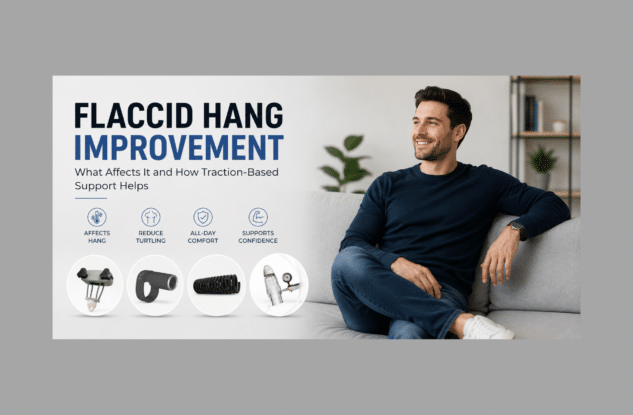
Flaccid Hang Improvement: What Affects It and How Traction-Based Support Helps
 By Olivia Spring | 3 September 2026, in Self Improvement
Flaccid hang can change throughout the day. One moment the penis may feel relaxed and naturally extended, and another moment it may retract due to cold, stress, movement, exercise, or clothing pressure. These changes are common, but for many men, frequent retraction or turtling can feel frustrating.
Flaccid hang improvement is not only about appearance. It can also affect comfort, confidence, how clothing fits, and how supported someone feels during daily life. When the penis retracts often, users may feel like they are constantly adjusting, worrying about their profile, or dealing with discomfort under clothing.
This guide explains what affects flaccid hang, why turtling happens, how daily support can help, and where traction-based products may fit into a realistic routine.
What Is Flaccid Hang?
Flaccid hang refers to how the penis naturally rests when it is not erect. A fuller, more relaxed flaccid hang usually means the penis sits lower and more extended away from the body. A retracted flaccid state may look shorter, tighter, or pulled inward.
It is important to understand that flaccid size is not fixed. It can change several times in a single day. Temperature, blood flow, stress, movement, hydration, clothing, and body tension can all affect how the penis hangs.
Because of this, users should avoid judging their body based on one moment. A cold or stressful moment may create more retraction, while warmth and relaxation may create a fuller hang.
Why Flaccid Hang Changes During the Day
The body constantly responds to the environment. When it is cold, the penis and scrotum may retract closer to the body to conserve warmth. When someone feels stressed or tense, the body may tighten and reduce relaxed blood flow. During exercise, adrenaline, friction, and movement can also cause temporary retraction.
These changes do not always mean something is wrong. They are part of normal body response. However, when retraction happens often or feels uncomfortable, users may start looking for ways to support a more stable flaccid position during daily life.
That is where anti-turtling support, better sizing, and traction-based routines may become useful.
Flaccid Hang and Penis Turtling
Turtling is one of the biggest reasons men search for flaccid hang improvement. It happens when the penis retracts inward and appears smaller or tighter while flaccid. This may happen because of cold, stress, anxiety, movement, tight clothing, or natural anatomy.
For some men, turtling is occasional. For others, it happens frequently enough to affect daily confidence. Understanding the trigger is the first step. If turtling mainly happens in cold weather, warmth and support may help. If it happens while sitting or exercising, clothing and positioning may matter more.
Users who want a deeper explanation can read this guide on what causes penis turtling, which covers the most common triggers and support options.
How Clothing Affects Flaccid Hang
Clothing can make a big difference. Tight underwear, compression shorts, narrow jeans, or rough seams can push the penis inward and make retraction feel worse. Poor support can also allow too much shifting, which may increase the need for adjustment throughout the day.
A better clothing setup should support without squeezing. The goal is not to force the penis into one position. The goal is to create a comfortable environment where the body can remain more relaxed and stable.
For men who want discreet support under regular clothing, Stealth Innerwear is designed to support daily anti-turtling comfort and help maintain a more extended flaccid profile during normal activity.
Why Temperature Matters
Temperature is one of the most noticeable factors in flaccid hang. Cold weather, cold showers, air conditioning, swimming, or sudden temperature changes can all cause the penis to retract.
Warmth often helps the body relax again. However, if the body is repeatedly exposed to cold or tension throughout the day, the flaccid state may keep changing. This is why some users prefer support products that help maintain positioning even when the environment changes.
A realistic routine should not expect the body to stay the same all day. Instead, the goal is to reduce extreme retraction and improve comfort during daily conditions.
Stress, Anxiety, and Body Tension
Stress can affect flaccid hang because the body responds to anxiety with tension. Muscles may tighten, breathing may become shallow, and the penis may retract as part of the body’s alert response.
This can become frustrating because noticing retraction can create more self-consciousness, and that self-consciousness may increase body tension. The result is a loop where stress and turtling feed into each other.
A supportive routine can help by making the issue feel less distracting. When users feel more stable under clothing, they may spend less time checking, adjusting, or worrying about temporary changes.
Can Flaccid Hang Be Improved?
Flaccid hang may be improved in terms of comfort, positioning, and consistency, but users should keep expectations realistic. Natural flaccid size will still change based on temperature, stress, hydration, activity, and body response.
The aim is not to freeze the body into one state. A better goal is to support a more relaxed and extended position more often, reduce unwanted turtling, and build a routine that feels comfortable enough to follow.
Daily support, correct sizing, gentle traction-based accessories, and better clothing choices can all play a role.
How Traction-Based Support May Help
Traction-based support works by helping the penis stay in a more extended position over time. In daily-wear products, this is usually gentle and low intensity. In dedicated traction products, it may be more structured and session-based.
For flaccid hang improvement, many users start with daily support rather than intense training. This can help them get used to positioning, sizing, and comfort before trying anything more advanced.
Some users may later add low-intensity stretching accessories or focused traction sessions, but the foundation should always be comfort and consistency.
Daily Support vs Focused Traction
Daily support and focused traction are different. Daily support is usually worn under clothing and helps with anti-turtling comfort, positioning, and routine consistency. Focused traction sessions require more setup, monitoring, and recovery.
For users mainly concerned with flaccid hang during normal life, daily support may be the better starting point. For users who want a more structured routine, session-based traction may become relevant later.
This comparison of all-day traction vs hanging sessions explains how low-intensity daily wear differs from focused hanging routines.
Low-Intensity Stretching for Flaccid Hang Support
Some users may want more than basic anti-turtling support but are not ready for advanced hanging sessions. A low-intensity accessory can help bridge that gap.
The Corkscrew is designed to be worn over Stealth Innerwear and support gentle stretching during daily wear. This type of accessory may be useful for users who want a more active under-clothing routine while still keeping comfort and discretion in mind.
Low-intensity does not mean careless. Any stretching routine should be gradual, comfortable, and easy to stop if something feels wrong.
Why Sizing Matters for Flaccid Hang Improvement
Sizing is one of the most important parts of any support routine. A product that is too tight can create discomfort, pressure, or irritation. A product that is too loose may shift, slip, or fail to support the desired position.
A good fit should feel secure but not restrictive. Users should be able to move, sit, walk, and go through their day without constant adjustment.
Before choosing a device or support product, the Stealth Sizer Tool can help users understand extended length and girth measurements. Better sizing creates a better starting point for comfort and long-term consistency.
What About Compression or Vacuum Devices?
Compression and vacuum devices are usually better suited for users who want focused traction sessions rather than simple daily support. These tools may have a place in a broader routine, but they require more setup and safety awareness.
A compression hanger depends on grip, wrapping, pads, and alignment. A vacuum hanger depends on suction, seal quality, chamber fit, and pressure control. These are more advanced than daily innerwear support and should be approached carefully.
Users who want to understand the difference between these two focused traction styles can read Compression Hanger vs Vacuum Hanger before choosing a more structured device.
Recovery and Comfort Still Matter
Even if the routine is low intensity, recovery and comfort still matter. Daily support should not cause pain, numbness, coldness, swelling, discoloration, burning, or irritation. If any of these signs appear, the product should be removed and the fit should be reviewed.
Comfort is especially important because flaccid hang improvement is usually a long-term routine, not a one-day fix. If the product feels irritating or restrictive, the user will not wear it consistently.
A better routine should feel simple, comfortable, and repeatable. That is what makes progress easier to maintain.
How to Track Flaccid Hang Changes
Tracking can help users understand what affects their flaccid hang. Instead of checking constantly throughout the day, users may benefit from simple notes about temperature, stress, clothing, support product use, comfort, and turtling frequency.
Photos and measurements can be misleading if taken under different conditions. A cold room, different posture, or different time of day can change the appearance. If users track progress, they should do it under similar conditions and avoid obsessing over daily changes.
The main thing to track is not only appearance. Comfort, reduced adjustment, better clothing confidence, and improved daily consistency are also signs that the routine may be helping.
What to Avoid
Users should avoid forcing the penis into position, wearing products too tightly, pulling aggressively, or using higher tension just because they want faster changes. Flaccid hang improvement should not involve pain or harsh pressure.
It is also important not to compare one person’s flaccid state with another’s. Anatomy, temperature sensitivity, body fat, stress response, and scrotal position can all affect how the penis rests.
A realistic routine should focus on the user’s own comfort and consistency rather than unrealistic comparisons.
When to Be Cautious
Flaccid retraction is often normal, but certain signs should not be ignored. If retraction is linked with pain, numbness, coldness, swelling, unusual discoloration, injury, or loss of normal sensation, users should stop using any device and speak with a qualified healthcare professional.
Support products should always feel comfortable. If something feels sharp, restrictive, or irritating, the setup is not right.
How Science Fits Into Flaccid Hang Support
The broader principles behind traction-based support include controlled tension, positioning, circulation, tissue response, and recovery. For flaccid hang improvement, the most important idea is consistency without excessive force.
Users who want to understand these principles more deeply can explore the science behind Stealth products.
A good routine should help the body feel supported, not forced. The more natural and comfortable the routine feels, the easier it is to stay consistent.
Product Support and Common Questions
Flaccid hang support can depend on anatomy, sizing, clothing style, turtling triggers, and comfort preference. Some users may prefer daily innerwear support, while others may explore low-intensity stretching or focused traction later.
For sizing, discreet shipping, product use, compatibility, and general support questions, users can visit the official Stealth FAQ page.
Improve Daily Confidence with Stealth for Men
Flaccid hang improvement starts with better comfort, better support, and a routine that fits real life. The right product should feel discreet, stable, and easy to use consistently.
Stealth for Men offers male enhancement and anti-turtling support products designed around fit, comfort, and everyday usability.
Explore the Stealth product range to find the option that best matches your body, lifestyle, and comfort needs.
Final Thoughts
Flaccid hang changes throughout the day because the body responds to temperature, stress, movement, clothing, and natural anatomy. These changes are normal, but frequent turtling or retraction can still affect confidence and comfort.
A better approach is to focus on daily support, correct sizing, comfortable clothing, gentle routine building, and realistic expectations. Traction-based support may help users maintain a more extended position more consistently, but it should never feel painful or forced.
The best routine is the one that feels comfortable enough to follow every day.
FAQs
What affects flaccid hang?
Flaccid hang can be affected by cold temperature, stress, anxiety, exercise, movement, clothing, blood flow, anatomy, hydration, and natural body response.
Can flaccid hang be improved?
Flaccid hang may be improved in terms of support, comfort, positioning, and reduced turtling, but natural flaccid size will still change throughout the day.
Does turtling affect flaccid hang?
Yes. Turtling can make the penis retract inward and appear shorter or tighter in a flaccid state.
Can anti-turtling innerwear help with flaccid hang?
Anti-turtling innerwear may help support a more extended flaccid position during daily wear, especially when sizing and fit are correct.
Is daily support better than hanging for flaccid hang?
For users mainly concerned with daily comfort and turtling, daily support may be a better starting point. Hanging is more focused and requires more setup and safety awareness.
Does sizing matter for flaccid hang support?
Yes. Correct sizing is essential. A product that is too tight can cause discomfort, while one that is too loose may not provide enough support.
When should I stop using a support product?
Stop if you notice pain, numbness, coldness, swelling, unusual discoloration, burning, irritation, or loss of normal sensation.
 Share
Share
 Tweet
Tweet
 Pin
Pin